More than a leader of his time — Lumumba’s philosophy shines on today’s struggles.
Patrice Lumumba has both inspired and terrified generations of Africans and Europeans until today. Though there is a vast body of literature about his life, relatively little has been done to explore Lumumba as a thinker in his own right.
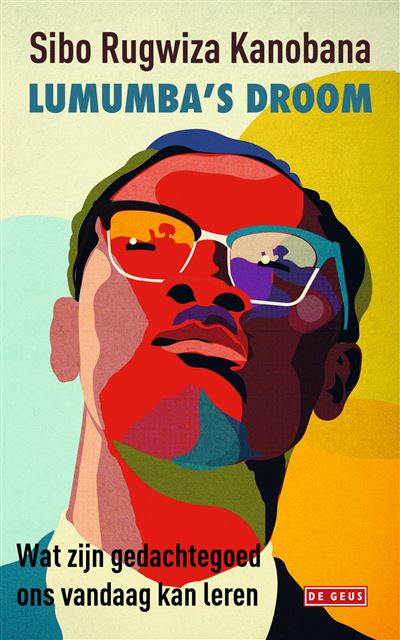
This is the distinctive contribution of Sibo Rugwiza Kanobana’s Lumumba’s Dream. Rather than limiting Lumumba to his (in)famous independence speech or to the circumstances of his murder, Kanobana takes seriously the breadth of his letters, essays, and reflections. He presents Lumumba not only as a political activist and decolonial icon, but as a philosopher whose insights on sovereignty, dignity, and solidarity remain deeply relevant to today’s world.
What sets this book apart is not only its focus but also its voice. Kanobana writes from the Congolese diaspora in Belgium, a perspective rarely fore- grounded in studies of Lumumba. This positionality allows him to situate Lumumba’s writings within the entangled histories of colonialism and migration, while also connecting them to the lived experience of the Black diaspora today. In doing so, he bridges past and present, showing how Lumumba’s vision continues to resonate in ongoing struggles for justice and equality.
Crucially, Lumumba’s Dream is written in an accessible style that opens up complex political ideas to a broad audience. By weaving together Lumumba’s own words with contemporary reflections, Kanobana makes the book both rigorous and relatable. It is neither hagiography nor detached scholarship, but a work that invites readers to think with Lumumba rather than merely about him.
At a time when debates on decolonization, racial justice, and global inequality are as urgent as ever, this book brings forward a neglected dimension of Lumumba’s legacy: his voice as a thinker whose ideas still illuminate our pre- sent.
Patrice Lumumba, the first democratically elected prime minister of independent Congo, is often seen as extremist, intolerant, and dangerous. But if you examine his speeches, essays, and letters, a very different picture emerges: that of a bridge builder. This book sheds new light on his thinking. And his ideas prove to be surprisingly relevant even today.